Showing posts with label TV. Show all posts

Tuesday, April 28, 2015

'Insight' on SBS ONE: 'Dancing with Dementia'

In a special edition of 'Insight' tonight, the program is set to explore the number of Australians living with dementia - that figure is set to soar in the coming years.

As the group gets larger many people with dementia are finding their own way through memory loss, determined to let their own personalities shine through.

They are fighting what is now Australia’s second biggest killer, ahead of stroke and cerebrovascular diseases, recent ABS data shows. (At the time of writing my book 'The Australian Ageing Generation Handbook' in 2013 and 2014, it was the third biggest killer). 

This week, 'Insight' hears powerful stories of sacrifice and success from people living with dementia, and the families that support them.

The program asks whether it is possible to lead a normal life with dementia and hears how humour could help balance out the despair of living with this debilitating brain disorder.

Guests include:

Elmer and Joan Anderson
Elmer: "Between the doctors, Joan and myself, we decided that, yes, I would go to a facility when they felt it was necessary so that I wouldn't harm my dear wife ... And that is exactly what happened, I had an episode, we went to the doctors and he said ‘it's time’."
Joan: "Our relationship's an awful lot better because now Elmer seems to have accepted what's going on and so because of that, the anger is not there as much and he is ... a much nicer person."

Doris Younane
"I mean the behaviour changes every day and mum went through some very, very aggressive, difficult times, but we just kept role playing, playing with her. So that we took the sort of anxiety out of mum, I suppose."

Alzheimer's Australia NSW's ambassadors - PJ Lane, Ita Buttrose and Doris Younane

Ray Morgan
"I find with dementia, anything you can enjoy helps you with the condition."

Graeme Samuel
"It is so, so fundamental now that we show people in the community what it is that dementia is really all about and importantly what it's not about. That people can live in the community and be very productive members of the community for so many more years and that you shouldn't actually fear someone having dementia or look at them with any sense of disassociation or stigma such as poor mum had to endure when she, you know, was diagnosed and when she started to show the symptoms."

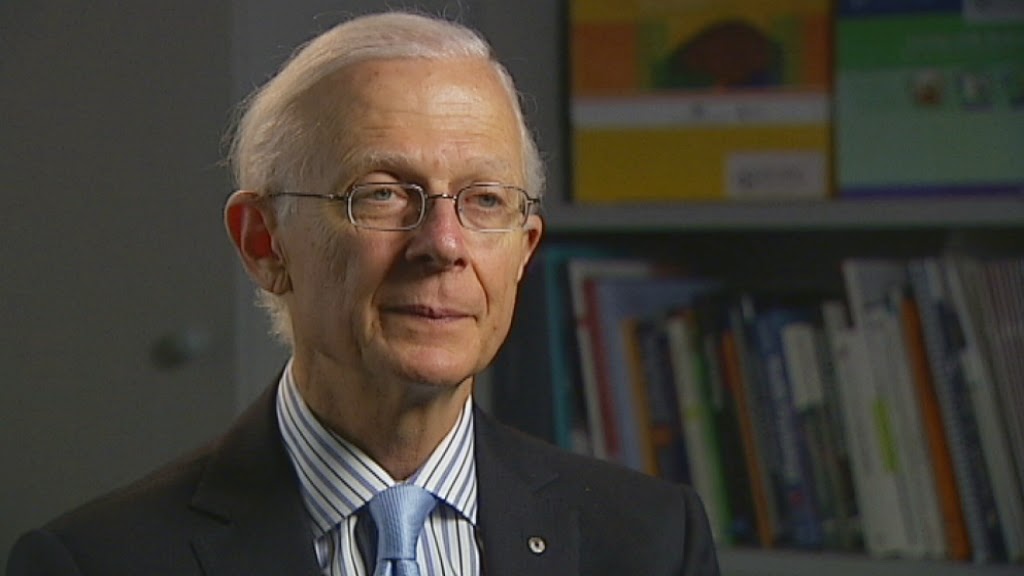
Alzheimer's Australia's Graeme Samuel AC - the National President of the organisation

Insight is hosted by Gold Walkley Award-winning journalist Jenny Brockie and airs every Tuesday at 8.30pm on SBS ONE.

See: www.sbs.com.au/insight
Twitter.com/jenbrockie
Twitter: #InsightSBS
Facebook.com/InsightSBS

Sunday, January 4, 2015

Christine Bryden on Today show - Early Onset Dementia: VIDEO

I watched this segment this morning on the Weekend Today show (in Australia) with much interest, especially given my mum passed away from dementia and other complications, as well as seeing the journey of someone dear to me going through early onset dementia.

And, as is captioned by this video upload on Nine's Jump-in platform: dementia is set to impact an increasing number of Australians, with 320,000 people currently living with this condition.

Watch as Christine Bryden and her husband Paul talk about Christine's dementia diagnosis at a young age, and how she and her husband have managed the diagnosis for over two decades. Yes, over 20 years.

Says Paul: 

"Family helps facilitate social presence. Never speak in third person about them... they are listening".

To watch the whole clip, click right here.

And to read more about Christine, click on her site here.


Wednesday, November 19, 2014

Alzheimer's - How You Can Reduce The Risk: 7.30 on ABC TV

Almost a million Australians will have dementia by the middle of the century. Can we hold back the coming 'dementia tsunami'?

Says Professor Henry Brodaty, from the Centre for Healthy Brain and Ageing

“People who are overweight, have type 2 diabetes, high blood pressure are at increased risk... Current smoking is a risk. So these are all things we can do something about.”

Professor Henry Brodaty

Meanwhile, Associate Professor Michael Valenzuela, from the Brain & Mind Research Institute suggests cross-training your brain for a healthier life:

“Doing this type of training in a group fashion, in a supervised way, will make you sharper, a little bit more mentally alert and able to handle complex information.”

Associate Professor Michael Valenzuela
In an important show tonight, Tracy Bowden will explore the latest developments tonight on ABC TV's '7.30'.

You can follow 7.30 on Twitter here: @abc730

And you can follow Tracy Bowden on Twitter here@tabowden

And, you can catch up on missed episodes and access transcripts at: http://www.abc.net.au/7.30/

Professor Brodaty is such an authority on dementia in Australia - I included him and his philosophies in my book 'The Australian Ageing Generation Handbook'. Read more about that here.

Brain games!

Sunday, September 21, 2014

New Dementia Aide: mCareWatch

An intriguing and important new device for people with dementia was shown on Australian TV last week - and it's an invention by two Australian brothers.

Peter Apostolopoulos and Paul Apostolis were profiled on Australia's Today show on September 14, 2014.


They're from new Australian company mCareWatch, founded by Peter and Paul, and they have developed the SOS Mobile Watch, which looks like a watch and tells the time just like an ordinary watch, but is also a monitoring and SOS alarm system with an emergency/medical alert call button, phone and GPS tracking device.


The watch is linked to the Optus mobile digital network and connects its wearer with up to three carers via their smartphone. Wearers hit the SOS button and the watch automatically calls the connected carers.

Options include $399 outright or $39 per month plus $69 set up charges, and includes the watch, charger, emergency calls, SMS and data charges.


Be mindful though, that at some point any kind of device could be difficult for someone with advanced dementia to even operate.

My recently deceased mother had a back to base alarm; she wore a pendant around her neck, and there was a phone nearby which, when activated by the button on the pendant, would enable someone to come on speaker phone and ask if she was okay. It did the trick for a while, but became pretty much obsolete when she was no longer capable of working out what to do with it. It was kinda heartbreaking, yes. I decided at that point to send the whole device back).


This Australian device is a sensational new product to help those in need, and their carers.

Watch the entire segment here from the Today show.

And find out all you need to know about the mCareWatch by visiting their website here.


Here are some intro videos to get you familiar:

<iframe width="560" height="315" src="//www.youtube.com/embed/Ix3CJR8eOEk?list=UU0WXey3T9GWw_jHgjJBhKAg" frameborder="0" allowfullscreen></iframe>

<iframe width="560" height="315" src="//www.youtube.com/embed/0mPO5kugCbI?list=UU0WXey3T9GWw_jHgjJBhKAg" frameborder="0" allowfullscreen></iframe>

<iframe width="560" height="315" src="//www.youtube.com/embed/M2XhWk02MJ4?list=UU0WXey3T9GWw_jHgjJBhKAg" frameborder="0" allowfullscreen></iframe>

Wednesday, July 9, 2014

Alzheimer's Australia: blood test to detect Alzheimer’s disease

There are exciting new developments spearheaded by Alzheimer's Australia, and today two experts from the organisation appeared on Australian breakfast TV to explain.

Dr Chris Hatherly, National Research Manager, Alzheimer's Australia, spoke on the Today show today to discuss how a blood test to detect Alzheimer’s disease could be a reality within two years. Watch the video here.

Meanwhile, Associate Professor Michael Woodward from Alzheimer's Australia discussed the new experimental test which can predict the development of Alzheimer's disease and associated dementia, on ABC News Breakfast with Paul Kennedy and Virginia Trioli. Watch the video here.


Wednesday, June 4, 2014

Australians forced to rethink aged care: Nine News - VIDEO

Last night I was on Nine News giving my view on the aged care fee structure changes taking effect from July 1, 2014.

Mike Dalton interviewed me in light of being a carer with the very real possibility that we need to place our mother in aged care as her health, dementia and dependency level escalates. For now, she lives in her own home, with almost around the clock care. Mike also knew I've just written a book about aged care, as a guide for carers. It's out July 7.

Mike gave viewers a comprehensive guide of what we can expect in aged care fees in Australia… and it's not an easy road ahead for our beloved elderly.

See the story here:


Here is the preview clip, screened the night before:


(I often screen-shot friends who are on TV and tag them on social media, so it kinda makes sense I should do the same for me, below!):


I truly hope that in the near future when my book hits bookshelves I get the opportunity to speak out more and more, on whichever platform, to connect with carers. We are the lifeblood of the elderly and the vulnerable. We need to be heard and acknowledged. Any carer will tell you that. And the people we care for would want you to know, too.

Sunday, February 2, 2014

Mel's Story on Dementia: 'Studio 10 You'

One of the many reasons I love watching Studio 10 (and its sister program 'Studio 10 You') on Channel Ten is that Ita Buttrose is a co-host, and because she is Alzheimer's Australia's National President, you know dementia and Alzheimer's will be firmly on the agenda and often under the spotlight, as it should be.

Each time the condition is mentioned, Ita highights it with the compassion we need for our loved ones dealing with it, as well as for their carers.

This is Mel's story about her beloved parents, and her story with dementia.

There is so much insight into the world of the carer in this video, and it's essential viewing.

Click here for the video


Monday, January 27, 2014

Ita's Call For A Better Australia - Studio 10: VIDEO

Listen to this and understand why Alzheimer's matters.

And why Ita Buttrose is the voice of the people affected by this condition.

Watch this, a clip from this week's Channel 10 show, 'Studio 10', on the back of Ita's Australia Day address on what she thinks Australia needs to do to be better, movineg 


Tuesday, August 20, 2013

Melinda Howes Q & A: 'Insight: Staying Alive' on SBS

This episode of 'Insight' on SBS - screening tonight - will focus on Australia's ageing population.

One of the guests is Melinda Howes.


Melinda is paid to think about the future and work out what the risks and opportunities are around the big issues we face. She is CEO of the Actuaries Institute, which released a recent white paper on “Australia’s Longevity Tsunami”.

“Of all the humans who have ever lived to age 65, half of them are alive today,” she says. “The concept of retirement will disappear; people will dip in and out of the workforce.”

Melinda was interviewed here by 'Our Sandwich Generation' blog on the issues we face as a nation, in line with tonight's 'Insight'.

Tell me how you think Australia’s ageing population will have a huge impact on Australia’s way of life, in so many ways.

If we are fit healthy and mentally acute until our 90’s or 100’s, this will impact how we work – how long we work for, work patterns, number of careers during our working lifetime. We will have multiple careers (and probably also multiple marriages!) and will have periods of retirement or flexible work when it suits us. The concept of 40 years of full time work is already a myth for many Australians, and the trend away from this will continue.

Our infrastructure and our cities will need to work for people of all ages. Even if we are fit and healthy, with 22% of the population aged 65+ by 2050 we’ll need fewer stairs, better access, room for mobility scooters (the Commonwealth Games venue on the Gold Coast is already facing this challenge in their planning  locals are outraged that only a small number of scooters will be accommodated) etc.

If we play our cards right we’ll be able to harness the experience of our elder Australians in a range of ways – through participating I the workforce, through mentoring younger workers, volunteering, policymaking... the list goes on. I see a future where our elders are valued and listened to. Not marginalised and ignored. We’ll have a wealth of experience at our fingertips.

In line with the Actuaries Institute ‘Australia’s Longevity Tsunami’ paper, you add that “Of all the humans who have ever lived to age 65, half of them are alive today.” Do you think people are generally aware of this huge shift in our society?

No people are certainly not aware. We think we are going to live as long as our grandparents, or maybe our parents, lived. We have not taken into account the rapid rise of longevity – global longevity has doubled in the last 100 years and in Australia since the late 1800’s  it’s risen by 30 years.

Even if we look at the life expectancy statistics put out by the ABS (life expectancy at birth of 79 for men and 84 for women), these are misleading and do not paint a true picture of how long we will be living. Period life expectancies (used by the ABS) are useful for comparing different countries, but not for estimating how long an individual may love. It doesn’t allow for future improvements in our longevity.

Using COHORT life expectancy gives a better picture. The Australian Government Actuary estimates that today’s 65 year olds ON AVERAGE will life until 86 for men and 89 for women. So today’s 65 year old men will live TWICE AS LONG IN RETIREMENT as they may be expecting if they read the ABS stats (from 65 to 86, when they were expecting 79).
And these is more. By 2050, 65 year olds will be living to 92 for men, and 93 for women.
But that doesn’t allow for some of the drugs and medical breakthroughs that were discussed in the program. If Dr David’s anti-ageing drug comes onto the market, life expectancies could jump up much more quickly than the above projections suggest.

'Insight' is hosted by Gold Walkley Award-winning journalist Jenny Brockie and airs every Tuesday at 8.30pm on SBS ONE.

'Insight: Staying Alive' on SBS

Tonight, an exceptional episode of 'Insight' airs - and one very relevant to this site, which will focus on Australia's ageing population.

Titled 'Insight: Staying Alive', it will screen on Tuesday 20 August 8.30pm, on SBS ONE.

After watching Kevin Rudd and Tony Abbott both struggle to answer questions on aged care during the first 2013 election debate, 'Insight' turns to Australia’s ageing population what it’s like to be old.

As many of us know, Australians are getting older and living longer – by 2050, almost a quarter of the Australian population will be aged over 65, compared to 14 percent now.

The brilliant host of 'Insight' - Gold Walkley Award-winning journalist Jenny Brockie - will speak to the growing generation of ‘centenarians’ (people aged 100+), as well as those aged in their 80s and 90s, about their longevity and whether long life is such a good thing.

One of the guests on the show, -Jacqueline Meredith, 81 - says: 

“Well I don’t want to live till I’m 100, I have a chronic disease. I’ve looked after my family and my close friends who have passed away”.


Indeed, guest Professor David Sinclair adds: “There will be a world where people can look forward to living at least beyond 100.”

Professor Sinclair is an Australian scientist trying to develop a pill to “cure ageing”. He says he could extend human life to 120 years – and beyond.

This of course poses myriad threats: overpopulation, insufficient resources and a poor quality of life,.

Guests on tonight's show include:

Ruth Frith
Brisbane resident Ruth Frith is 103 and holds world records in athletics events at the Masters Games. Ruth’s sport training is temporarily on hold after a recent medical setback – her first time in hospital since giving birth to her children. Ruth is undeterred and says she’ll get back into training next week – against doctors’ orders. She turns 104 later this month.

David Sinclair
Geneticist David Sinclair is working on a “cure for ageing”. He is testing some drugs on mice that he says could extend human life to 120 years and beyond. He hopes clinical trials now taking place will lead to anti-ageing drugs for humans within his lifetime. David is based at UNSW Medicine and Harvard Medical School.

Ken Clarke
At age 97, Ken Clarke has been receiving the pension for 37 years – more years than he actually worked. He smoked most of his life but quit when he had a major heart attack and triple bypass surgery at age 88.

Giovanni Pilu
Giovanni Pilu is from an island which boasts an unusual amount of centenarians: Sardinia in Italy. One of Giovanni’s relatives lived to 104 and smoked cigars, drank homemade wine and played cards late into the night. Giovanni says the simple diet and laid-back attitude of Sardinians may explain their longevity. (An interview with Giovanni will be posted on this site tomorrow).


Melinda Howes
Melinda Howes is paid to think about the future and work out what the risks and opportunities are around the big issues we face. She is CEO of the Actuaries Institute, which released a recent white paper on “Australia’s Longevity Tsunami”. “Of all the humans who have ever lived to age 65, half of them are alive today,” she says. “The concept of retirement will disappear; people will dip in and out of the workforce.” (See separate blog post with an interview with Melinda).


'Insight' is hosted by Gold Walkley Award-winning journalist Jenny Brockie and airs every Tuesday at 8.30pm on SBS ONE.

Sunday, June 30, 2013

Early Onset Dementia In Your 40s and 50s: 'A Current Affair' Report

Being diagnosed with dementia can be utterly devastating, not only for the person receiving the diagnosis but also for the family who watches on, and who ultimately become carer/s to the person with the dementia diagnosis.

Tracy Grimshaw from TV's 'A Current Affair' investigates the sadness of living with dementia, in this recent report.

Incredibly, one Australian gets diagnosed with dementia every six minutes.

With more than 100 types of dementia, it represents the third highest cause of death in Australia.

And it's not just an 'old person's diagnosis' - sadly, some people are diagnosed in their 40s and 50s - and there is no cure.

Click here to watch the report on 'A Current Affair'.


Friday, June 22, 2012

A Current Affair report: 'The Sandwich Generation'

Did you see the report tonight on A Current Affair on 'The Sandwich Generation'?

It's exactly what this blog is all about. For more on the story, go here: http://aca.ninemsn.com.au/article/8488149/packed-to-the-rafters

Click here for the actual report, courtesy of McCrindle Research:

Essentially, the story is about how the 'Baby Boomers' didn't expect to be where they are today, caring for several generations.

As Tracy Grimshaw says, they're called the sandwich generation, because "they're struggling to support their parents and their adult children."


In this story the woman cares for her 97 year old mother and her grandchildren, on a daily basis.

Another face of the sandwich generation is someone like me:

Age 40 [so, not a 'Baby Boomer' - instead, Generation X], raising toddler-age kids, caring for an elderly mum, and still trying to work and maintain a marriage and a life.

It's not a walk in the park, that is for sure.

Are you in the same position? What are your experiences of this juggle?